HAL Tejas Crash at Dubai Air Show 2025: Full Details, Causes & Impact on India’s Defence Image
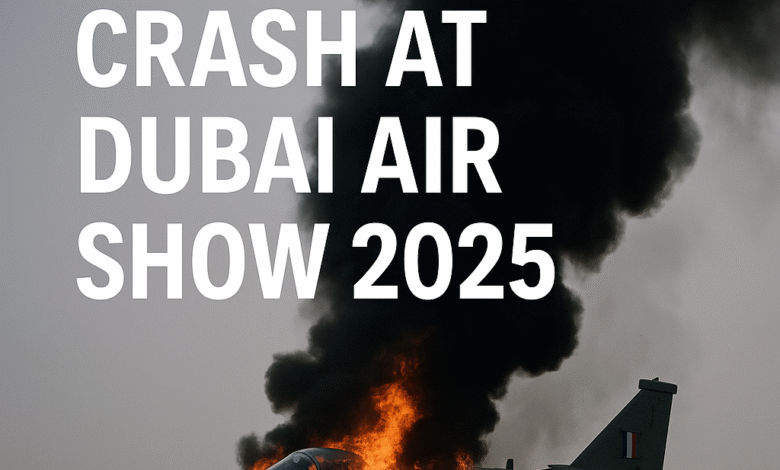
The aviation world was shocked on 21 November 2025 when an Indian Air Force (IAF) HAL Tejas fighter jet crashed during a high-speed aerobatic display at the Dubai Air Show 2025, resulting in the tragic death of the pilot, Wing Commander Namansh Syal. The incident occurred during a demonstration session attended by global defence experts, aviation companies, and thousands of spectators.
This article covers the full details, timeline, possible causes, expert opinions, Tejas aircraft features, and the broader impact of the crash on India’s defence ecosystem.

What Happened? – Timeline of the Crash
During a planned aerobatic routine at around 2:10 pm local time, the Tejas fighter jet entered a sharp manoeuvre at relatively low altitude. Moments later, the aircraft appeared to lose stability, resulting in a steep descent and a fiery crash beyond the runway limits.
Eyewitnesses reported:
-
A sudden loss of altitude
-
Thick black smoke immediately after impact
-
Fireball explosion on the ground
-
No visible ejection from the aircraft
The Dubai Air Show emergency team responded immediately, but the pilot could not be saved.
About the Tejas Fighter Jet
The HAL Tejas is India’s indigenous 4.5-generation Light Combat Aircraft (LCA) developed by the Aeronautical Development Agency (ADA) and Hindustan Aeronautics Limited (HAL).
Key Features of Tejas
-
Lightweight, single-engine multirole fighter
-
Advanced avionics and fly-by-wire system
-
Capable of air-to-air, air-to-ground, and precision strike missions
-
Designed for high manoeuvrability
-
Proud symbol of India’s Make-in-India defence programme
The aircraft has been showcased in several international airshows, making this accident particularly impactful on global perception.
Possible Causes of the Crash – Early Expert View
Official investigations are ongoing, but early technical assessments point to two possible reasons:
1. Negative-G Turn Gone Wrong
Experts believe the pilot may have been performing a “negative G-turn” manoeuvre, which is extremely demanding on both aircraft and pilot. If executed incorrectly at low altitude, recovery becomes nearly impossible.
2. G-LOC (G-force Induced Loss of Consciousness)
High-speed aerobatics can cause a pilot to momentarily lose consciousness due to extreme G-forces.
If G-LOC occurred during a low-level manoeuvre, the pilot wouldn’t have had time to recover.
Mechanical Possibility
There is also a possibility of:
-
Sudden control system failure
-
Engine power loss
-
Flight control malfunction
However, authorities have not confirmed any mechanical faults yet.
Voice from the Defence Community
Aviation professionals worldwide expressed concern over:
-
Extremely low display altitudes
-
Especially aggressive manoeuvres chosen for international demonstrations
-
The overall safety protocols for aerobatic displays
However, many also highlighted that accidents during high-performance demonstrations are not uncommon with even the world’s most advanced jets.
Impact on India’s Defence Image
Tejas is one of India’s most important strategic defence programs. A crash during an international show has several implications:
1. Reputational Impact
The aircraft is under consideration by several countries for export.
A visible crash may:
-
Slow down export negotiations
-
Increase scrutiny from foreign buyers
2. Operational Review
The IAF will reassess:
-
The permitted aerobatic manoeuvres for Tejas
-
Minimum safe altitude for displays
-
Pilot fatigue and G-force training
3. HAL & ADA Accountability
The Court of Inquiry will analyse:
-
Flight data
-
Cockpit voice recordings
-
Maintenance logs
-
Video footage
Findings will dictate whether changes to Tejas systems are required.
How Serious Is This for the Tejas Program?
While tragic, this crash does not signal a failure of the Tejas platform.
Even globally renowned fighters like:
-
F-16
-
Mirage-2000
-
Eurofighter Typhoon
-
F-18 Super Hornet
have faced airshow crashes during aerobatics.
India’s defence analysts believe the Tejas program will continue progressing, especially because:
-
Over 200 units are already on order
-
Tejas Mk-1A induction has begun
-
Tejas Mk-2 development is underway
-
AMCA (5th generation) work depends on the ecosystem Tejas built
Tribute to Wing Commander Namansh Syal
Wing Commander Syal was known for:
-
Exceptional flying skills
-
Years of experience with Tejas
-
Prior participation in multiple international demonstrations
His loss is mourned across the aviation and defence community.
Official Investigation Underway
The IAF has ordered a detailed Court of Inquiry.
Areas of focus include:
-
Pilot’s physiological condition
-
Flight data recorder (FDR) analysis
-
Structural and engine performance
-
Airshow safety protocols
Final results may take several weeks but will play a crucial role in enhancing Tejas’ safety envelope.
Conclusion
The Tejas crash at the Dubai Air Show 2025 is a tragic event that has raised many questions but also underlines the risks inherent in high-performance aviation. While the loss of a skilled pilot is heartbreaking, it also presents an opportunity for India’s defence agencies to learn, improve, and strengthen the Tejas program further.
The world will be watching the investigation closely — and India’s response will shape the next chapter of its indigenous fighter development journey.